


Multi-factor authentication used to be the advice. Now it is the starting point. Attackers no longer just phish passwords; they phish the MFA prompt itself. Adversary-in-the-middle phishing kits proxy the real login page and capture the session after the victim approves, and push-notification fatigue attacks simply bombard users with prompts until someone taps approve. SMS codes and simple approve-button MFA do not hold up against either technique.
Phishing-resistant MFA closes that gap. This guide explains what it is, why it matters for Australian businesses, where it sits in the Essential Eight framework, and how a Managed IT Service Provider (MSP) implements it without disrupting your team.
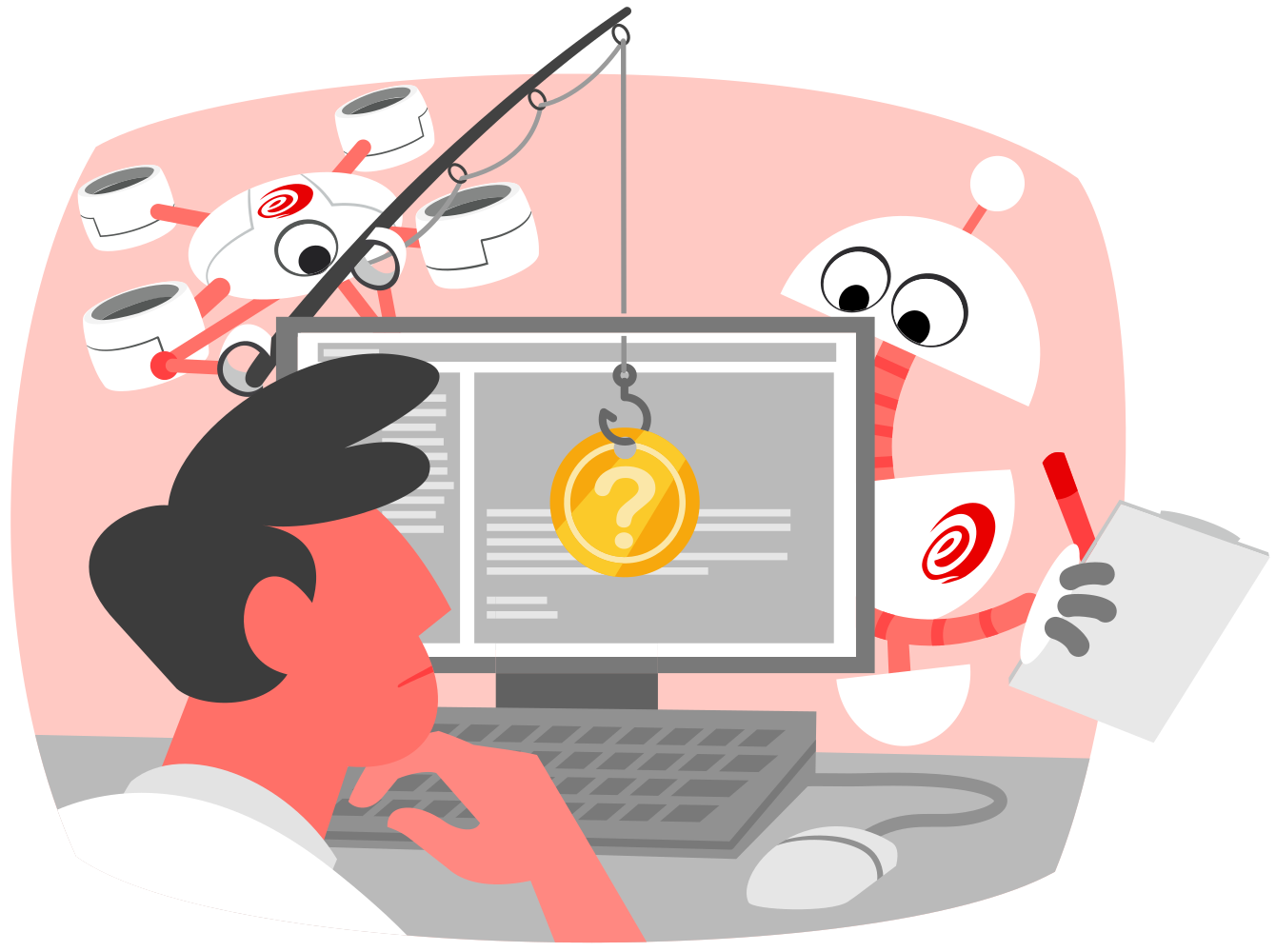
Phishing-resistant MFA covers authentication methods where the credential is cryptographically bound to the legitimate service and the user’s device, so there is nothing a fake login page can capture and replay. In practice that means FIDO2 security keys, passkeys, Windows Hello for Business, and smart cards. Even if an attacker tricks a user onto a convincing fake site, the authentication simply fails, because the credential will not respond to a domain it was not registered to. That is the difference from SMS codes, emailed links, and basic push approvals, all of which a well-built phishing kit can relay in real time.
Multi-factor authentication is one of the eight mitigation strategies in the Australian Government’s Essential Eight framework, and the maturity model raises the bar on the type of MFA as you climb. The higher maturity levels expect phishing-resistant methods rather than codes and simple approvals, which is one of the main practical jumps businesses face when moving up from the entry level. Our Maturity Level 2 guide and Maturity Level 3 guide cover the MFA requirements at each level in detail, and our Essential Eight service implements them. Cyber insurers are heading the same direction: MFA evidence is now a standard renewal question, and phishing-resistant methods are an increasingly common expectation for privileged accounts.
Rolling out phishing-resistant MFA is as much a change-management exercise as a technical one. Here is how an MSP gets it done:
1. Assessment and strategy
An MSP starts by mapping who authenticates to what, which accounts are privileged, and where weak MFA forms are still in use. That produces a rollout plan that targets the highest-risk accounts first instead of disrupting everyone at once.
2. Implementation across your environment
In a Microsoft 365 environment this means enabling passkeys or FIDO2 keys and Windows Hello for Business through Entra ID, then using conditional access policies to require phishing-resistant methods for privileged roles and sensitive applications. It is part of the broader access management discipline of controlling who can reach what, under which conditions.
3. Training and awareness
Users adopt what they understand. Short, practical training on why the change is happening and how passkeys work day to day keeps support tickets down and stops staff falling back to weaker methods.
4. Ongoing monitoring and support
Authentication is not set and forget. An MSP monitors sign-in logs for anomalies, handles lost keys and device replacements, and tightens policies as the threat landscape moves.
5. Compliance and reporting
Whether the driver is the Essential Eight, SMB1001, an insurer, or a client security questionnaire, an MSP provides the evidence and reporting that shows your MFA controls are in place and enforced.
Choosing a local MSP in Perth, like Epic IT, means personalised service from a team that understands the compliance pressures on WA businesses and can respond quickly when something needs attention.
Phishing-resistant MFA is the single most effective upgrade most businesses can make to their identity security, because it removes the human judgement call from the moment attackers exploit hardest. If your MFA today is an SMS code or an approve button, that is the gap to close first.
If you are a Perth or WA based business looking to make the move, our team can assess your current setup and plan the rollout. Learn more about our Managed Cyber Security and Managed IT Services.